
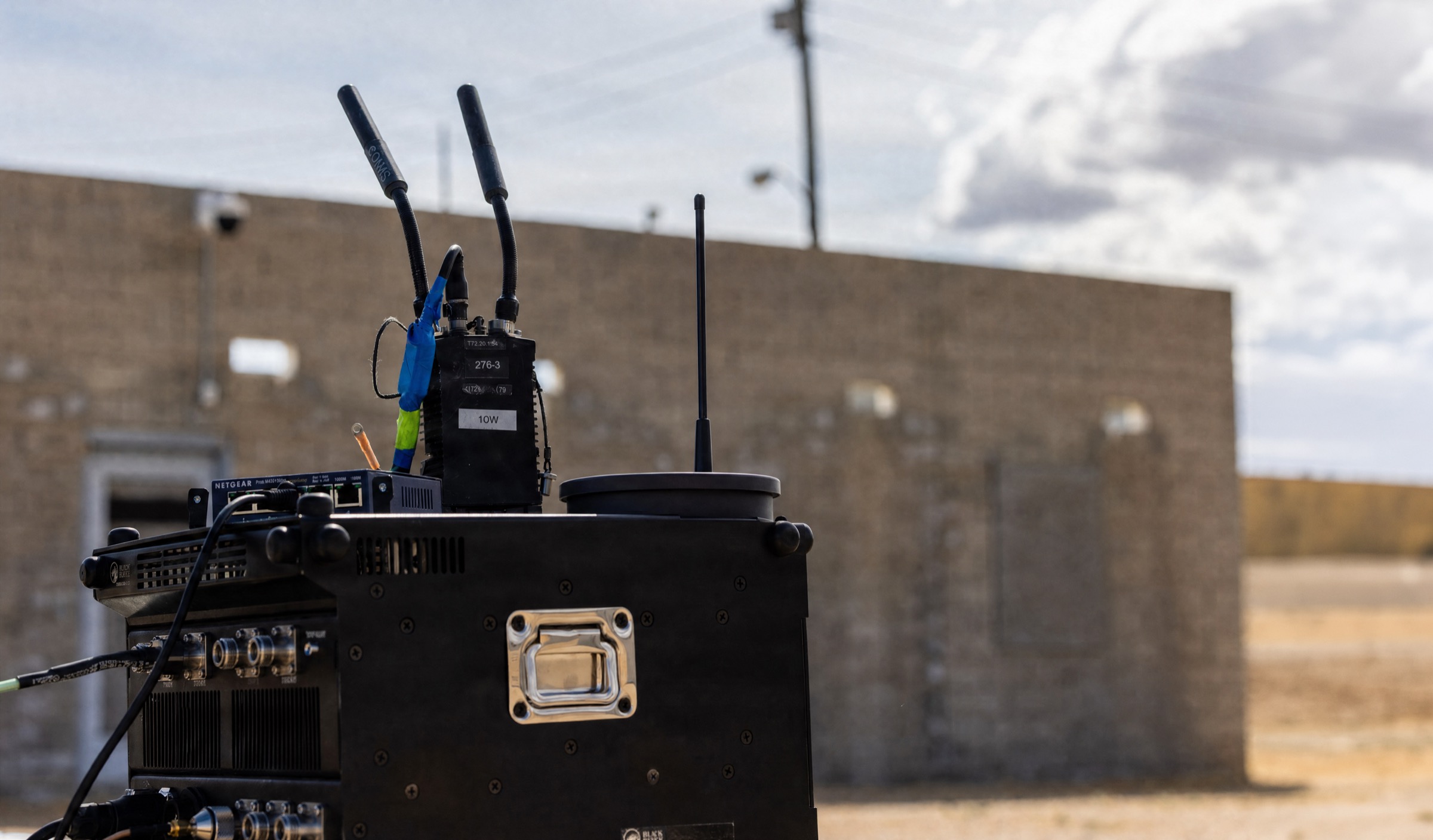
Step 3 of the pipeline · Denied-area comms
Raven Net
A self-forming mesh network that needs no infrastructure.
- Who has this problem
- Teams operating where primary C2 is unavailable, monitored, or jammed.
- What they do today
- Accept the gap, or stand up infrastructure they cannot conceal.
- What today costs
- Loss of C2 at the moment it matters, or a detectable signature that compromises the element.
What changesA mesh that forms itself in minutes from placement, with a commercial-traffic signature and nothing to erect. Nodes run 72+ hours and the network sustains itself.
What Raven Net does
Zero-configuration mesh
Deploy Ravens by hand, vehicle, or drone, and the network forms itself in minutes. No configuration, no pairing, no operator setup.
Distributed RF sensing
Every node contributes RF sensing data to the common picture. One console covers the entire range or area of operations, not the area in front of a single sensor.
Out-of-band C2
Relay for uncrewed platforms and implants in compromised environments. Use it when primary C2 links are unavailable, monitored, or jammed.
Low-signature RF profile
LoRa burst protocols blend with commercial IoT traffic, so the mesh carries no distinctive military waveform.
Raven Eye integration
All mesh data flows directly into Raven Eye, so the operator sees every node's status, sensor feeds, and collected intelligence from one interface.
Solar-extended endurance
Raven Node runs 72+ hours on duty cycle, longer with an optional 1W solar panel. Deploy and leave.
Specifications
- Mesh formation
- Self-forming, minutes from placement
- Endurance per node
- 72+ hours, extended with a 1W solar panel
- Waveform profile
- LoRa burst, consistent with commercial IoT traffic
- Command integration
- Reports into Raven Eye
- Range, power, and channel plan
- Available on verification
- Encryption and key management
- Available on verification
A Self-Forming Network with No Infrastructure.